Tim’s view
The war in Iran will force governments and companies to rethink the necessary conditions for energy security.
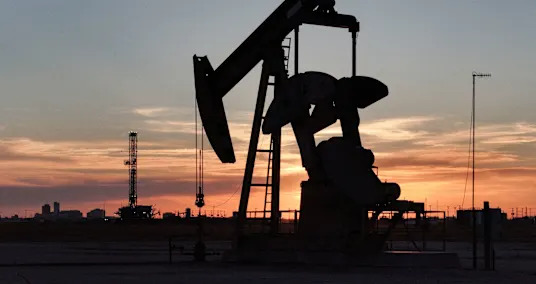
The prevailing sentiment at CERAWeek has been that financial markets have not yet come to terms with how long lasting the oil and gas market disruption from the war is likely to be; higher prices will very likely loom even if the US military quickly prevails. No matter what happens next, the war underscores the volatility inherent to the global fossil fuel trade at a time when alternative technologies are proliferating.
Sure, renewables are exposed to upfront, capex-related risk. And yes, China effectively controls the market for wind, solar, and battery hardware, and for the minerals they require. But once they’re installed, these technologies are largely insulated from geopolitical events, as Pakistan has proved in recent weeks by leaning on solar while neighboring Bangladesh suffers from skyrocketing gas prices. “The fact that the wind and sun are free and domestic and inexhaustible doesn’t get nearly as much play as it deserves,” David Crane, a former senior US energy official who is now CEO of the investment firm Generate Capital, told me this week. Put another way, the sun — unlike, say, a strait — can’t be shut down by one’s adversaries.
Fossil fuels, conversely, are permanently exposed to ongoing opex risk. Even the US, the world’s top producer, can’t completely insulate itself from price spikes. But the fact is that every country will need a mix of all technologies for the foreseeable future to maintain access to reliable, affordable energy.
After the energy crisis of the 1970s, many countries leaned diversified international trade and coordination as the solution, hoping that increasing the number of sources of supply would diminish any one actor’s ability to throttle the market. That mostly worked for 50 years. The legacy of this war will be a shift by countries to lean trade as much as they can, Meghan O’Sullivan, a former National Security Council official and energy geopolitics expert at Harvard, told me: “The lesson many will take away from this is that being exposed to global shocks is something they need to avoid.”
Notable
The replacement for the liberal international order “won’t be negotiated in Geneva or adjudicated in The Hague,” writes Foreign Policy, “It will be determined by who controls the energy flows, mineral deposits, and technological systems on which all modern life now depends.”
LATEST POSTS
- 1
 10 Hints for an Effective New employee screening
 - 2High velocity Internet services for Metropolitan Regions
- 3WHO suspends medical evacuations from Gaza following death of contractor in 'security incident'
- 4More than 3 million eye drops have been recalled from CVS, Walgreens and other national retailers. How to check if yours are safe
- 5Finding China: Four Urban areas for a Remarkable Excursion



- Bruno Mars tour 2026: How to get tickets for 'The Romantic Tour,' presale times, prices and more
- Netflix’s Price Hikes Just Got Rejected by an Italian Court. Here’s Why It Matters Everywhere
- First Greenland, now Iceland? Annexation joke by Trump ally gets frosty response in the Arctic nation.
- 1st results from Blue Ghost lunar lander reveal how much we still don't know about the moon
- Discovery of ancient pleasure boat reveals Egypt's maritime history
- 'Harry Potter' fans rejoice: HBO releases 1st trailer for new TV series, set to premiere this Christmas
- 12 times rockets and spacecraft crashed and burned in 2025
- Step by step instructions to Protect Your Senior Condo for Ideal Wellbeing and Solace
- Warming winters lead to more nitrate pollution in the drinking water near farms